

Promoting Education and Stability at Beth Tikva
- info731618
- Jun 1
- 2 min read


Beth‑Tikva, a safe home founded by INHO, stands as a beacon of hope for children fleeing gang violence, hunger, and instability in Haiti. In a country where access to education and basic security is increasingly fragile, Beth‑Tikva provides a nurturing environment where children can learn, grow, and rebuild their lives. This post explores how Beth‑Tikva integrates education, protection, and sustainable practices to create a pathway toward a brighter future for Haiti’s most vulnerable youth.
The Role of Beth‑Tikva in Education
A Safe Home That Makes Learning Possible
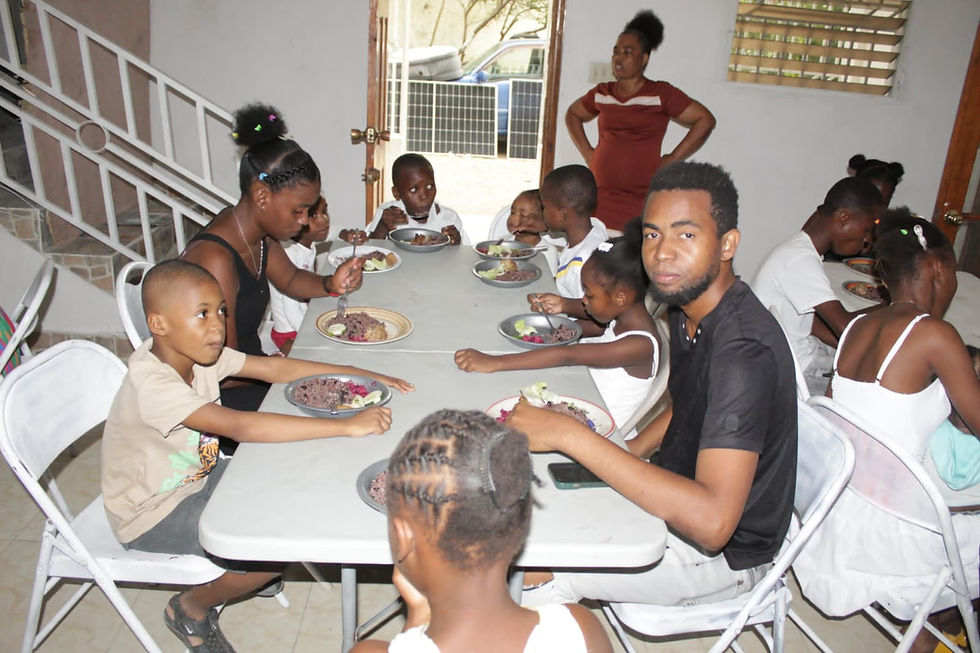
For many children in Haiti, the chaos of violence and displacement makes education nearly impossible. Beth‑Tikva changes that reality by offering stability, daily meals, emotional support, and a structured environment where learning can flourish. Children from pre‑K to college receive scholarships, school materials, tutoring, and enrichment programs designed to strengthen both academic and life skills.
Challenges Children Face Before Arriving at Beth‑Tikva
Interrupted Schooling: Many children arrive with years of disrupted education due to insecurity and displacement.
Trauma and Stress: Exposure to violence and hunger affects concentration, confidence, and emotional well‑being.
Economic Barriers: Families often cannot afford school fees, uniforms, or transportation.

Success Stories
Despite these challenges, Beth‑Tikva has produced remarkable achievements. Two young women are currently studying to become physicians, and many others are excelling in high school, vocational training, and university programs. These successes demonstrate the transformative power of stability, love, and education.
Sustainability and Life Skills at Beth‑Tikva
Building Resilience Through Practical Learning
Sustainability is woven into daily life at Beth‑Tikva. Children participate in hands‑on learning activities that teach responsibility, creativity, and environmental awareness.
Climate Education: At‑home classes introduce children to climate change, environmental protection, and practical solutions for Haiti’s ecological challenges.
Computer Science: Students learn Python, HTML, and digital literacy skills that prepare them for future careers.
Creative Sustainability: Every year, the children design and sew their own school uniforms — a tradition that builds confidence, teamwork, and self‑reliance.

A Model for Haiti’s Future
Beth‑Tikva demonstrates that when children are protected, nourished, and educated, they can rise above even the most difficult circumstances. By combining safety, education, and sustainable practices, INHO is shaping a generation capable of rebuilding their communities and contributing to a more stable and hopeful Haiti.

Comments